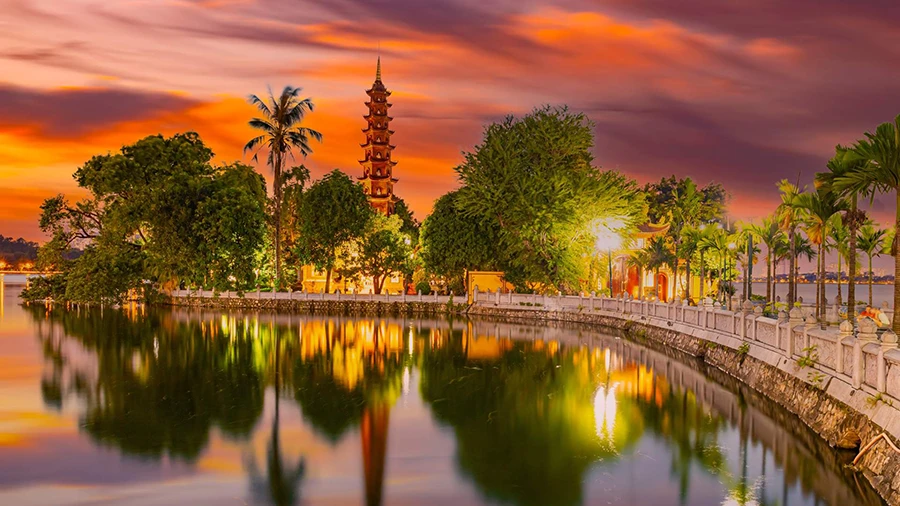
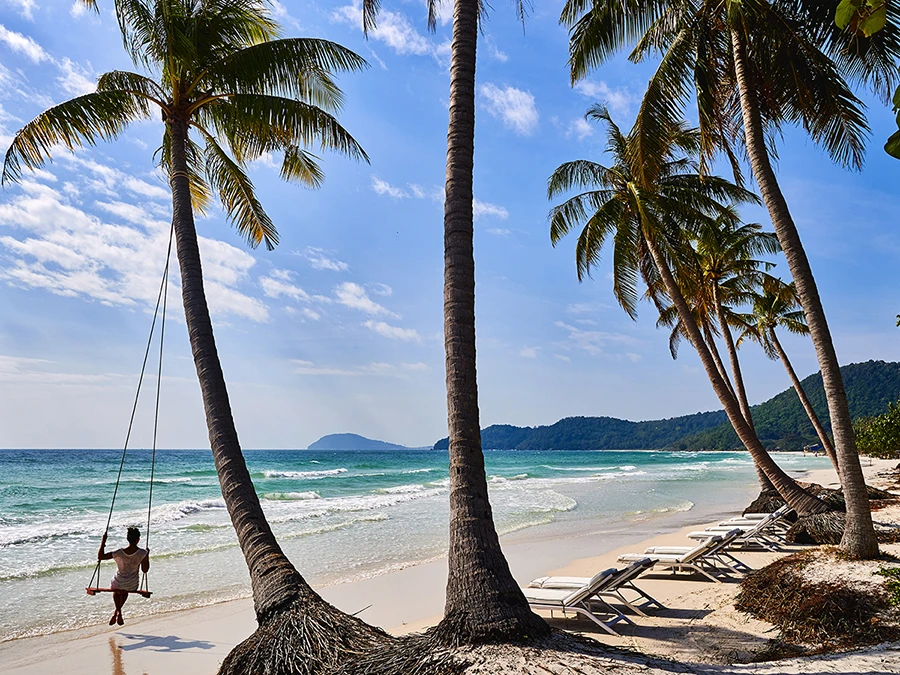
Southern Vietnam (from Da Nang southward, including Ho Chi Minh City, Phan Thiet, Vung Tau, and Phu Quoc)
- Dry Season: November to April
- Rainy Season: May to October
Even during the rainy season, showers are typically short-lived (20–30 minutes), with plenty of sunshine the rest of the day. As a result, southern Vietnam is ideal for year-round travel.
Central Vietnam (including Da Nang, Hoi An, Nha Trang)
- Rainy/Monsoon Season: October to November
- Cooler Weather: December to February
- Best Time to Visit: April to September
This region is more affected by seasonal storms and typhoons. Summers are hot and sunny—perfect for beach holidays.
Northern Vietnam (including Hanoi and Halong Bay)
- Best Travel Seasons: Spring (March–April) and Autumn (September–October)
- Rainy Season: May to August
- Winter Months: December to February, with temperatures dropping to +15°C or lower
The North experiences more distinct seasons, with cooler, damp winters and hot, humid summers.
Cuisine
Vietnamese cuisine has absorbed the best of Chinese, French, Thai, and Khmer culinary traditions, blending them into a unique and flavorful culinary identity. The foundation of most dishes is rice, often paired with an array of spices, herbs, and, most notably, fresh seafood—the undisputed star of the Vietnamese table.
Think: shrimp boiled in coconut milk and then fried with rice, grilled lobsters, crabs, oysters, and even shark soup—all freshly caught. In fact, the Vietnamese traditionally do not eat frozen food, valuing freshness above all.
Among the national specialties, nem pancakes deserve special mention. Their fillings can vary widely, but one thing is constant: the savory minced meat is always wrapped in delicate rice paper.
And of course, there’s an abundance of tropical fruit: sweet miniature pineapples, juicy mangoes, dragon fruit, watermelon, bananas—the list goes on. But words can only go so far. To truly experience it, you’ll have to come and taste it all for yourself!
The best part? Food prices are very reasonable, ranging from just $2.50 to $20 per dish.
Time
Ahead of Tbilisi by 3 hours.
Currency
The official currency of Vietnam is the dong, but the American dollar is used as an unofficial currency (in many stores the price of goods is indicated in dollars). Exchange offices are available in all banks and large hotels.
Visa
A citizen of Georgia who is traveling to the Socialist Republic of Vietnam is required to obtain the appropriate category of visa (electronic https://evisa.gov.vn/).
Geographical Information
Vietnam is a country located in Southeast Asia, sharing borders with China to the north, and Laos and Cambodia to the west. To the east and south, it is bounded by the South China Sea. The country has a long, narrow shape, stretching from north to south along a coastline that spans approximately 3,400 kilometers.
The northern region features the Yunnan Highlands, home to Vietnam’s highest peak, Mount Fansipan, which rises to 3,143 meters above sea level. In contrast, the southern part of the country is dominated by the flat, fertile Mekong Delta, one of the most productive agricultural areas in Southeast Asia.
Historical Background
Vietnam’s history spans centuries and reflects a complex tapestry of foreign influence and national resilience. The country has been shaped by periods of rule under Chinese and Japanese emperors, followed by nearly a century as a French colony, and later endured nearly 30 years of conflict and bombing during the Vietnam War involving American forces.
Despite these challenges, Vietnam has preserved its national identity, cultural richness, and enduring optimism. Entering the third millennium, the country continues to forge its own path of development and modernization.
Today, Vietnam is home to more than 7,300 historical and architectural monuments, along with a wealth of ancient traditions, customs, rituals, and festivals that continue to thrive throughout the country.
Language and Religion
The official language of Vietnam is Vietnamese, though French, English, Chinese, and Khmer are also spoken by various communities.
Vietnam is home to a diverse range of religious beliefs, including Buddhism, Confucianism, Taoism, Catholicism, Islam, Protestantism, as well as followers of indigenous local pagan traditions.
Transport
Vietnam offers a wide range of modern transportation options. There are at least ten domestic airlines providing air travel across the country, along with extensive intercity bus services and readily available taxis.
For certain routes, especially in coastal and riverine areas, sea and river transport can be a convenient and scenic choice. The country’s main ports include Da Nang, Hai Phong, and Ho Chi Minh City.
Holidays
- January-February — Vietnamese New Year. The most important holiday in the life of the Vietnamese. According to custom, it is celebrated with the family, and wherever a Vietnamese is, he will definitely come home for the celebration.
- February (4th day of the first month) — Wrestling Festival in Hanoi
- February (15th day of the first month) — Paper Lantern Festival, everywhere
- March 8 — International Women's Day
- End of April (lasts two days) — Fireworks Festival in Da Nang
- May 1 — International Workers' Day
- May (15th day of the fourth month) — Buddha's Birthday, everywhere
- September 2 — Vietnam Independence Day
- From the end of December to the beginning of January — Kite Festival in Vung Tau
Medicine
All medical services in Vietnam are paid. If you need medical assistance, it’s recommended to use the medical insurance policy provided when you purchased your tour. For those interested, Vietnam also offers a variety of traditional healing methods such as acupuncture, herbal medicine, therapeutic massage, and more.
Useful Tips
- It is not recommended to drink tap water in Vietnam.
- You can safely order drinks with ice only in large cities and hotels, as in rural areas, ice may be made from untreated river water.
- Before traveling to Vietnam, it is advisable to get vaccinated against malaria and yellow fever, although there are no official vaccination requirements.