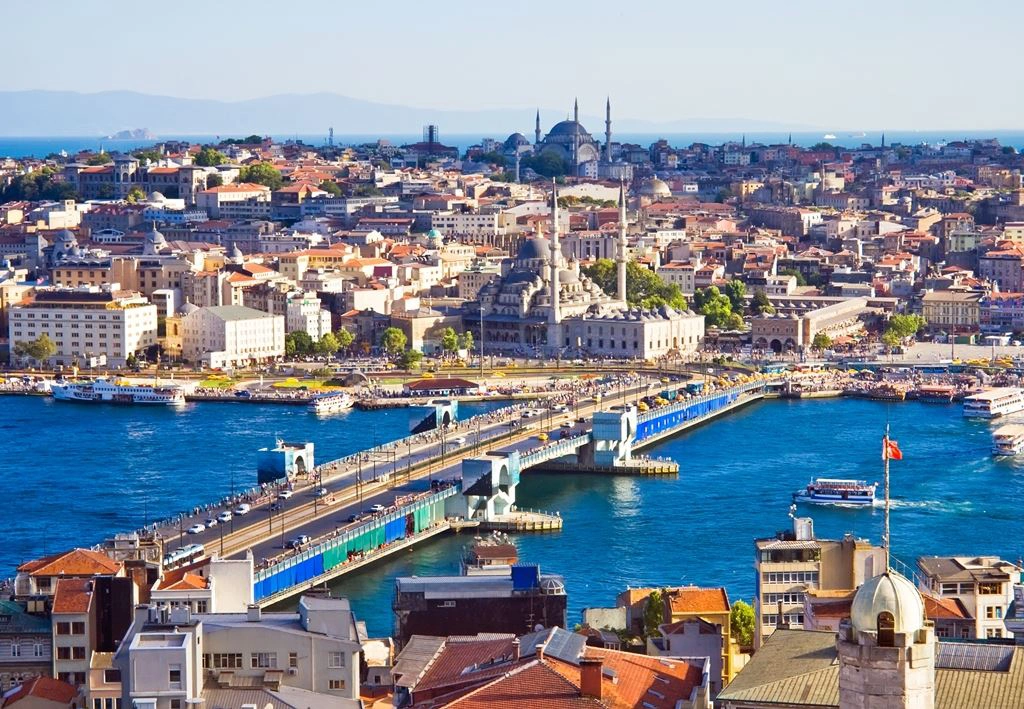
History of Istanbul
In April 1204, the city was stormed and ruthlessly plundered by the Crusaders for the first time in its history. It was not until 1261 that Constantinople returned under the rule of Rome.
In 1453, the city was captured by Sultan Mehmed II and declared the capital of the Ottoman Empire, which stretched from Algeria to Basra and from Budapest to Mecca. The city received a new name—Istanbul—and became not only the “heart” of a great empire but also the center of the Islamic world.
The reign of Suleiman I Kanuni (the Lawgiver), one of the most enlightened rulers and a brilliant military leader, was especially significant for the city. Under his rule, the Ottoman Empire reached the peak of its prosperity, expanding its territory to include Iraq, Libya, and Southeastern Europe. Suleiman I is also remembered for a legendary love story—the romance between the powerful sultan and a Slavic beloved.
Her exact origin remains unknown, and history has not preserved her real name. She is known as the legendary Roksolana, whose love the sultan carried throughout his life. After her death, in memory of his beloved wife, Suleyman ordered a tomb to be built in the same place where he himself would be laid to rest—in the garden of the Suleymaniye Mosque.
Suleiman’s reign also marked the peak of the creativity of the great architect Mimar Sinan, who built 360 structures, including 84 mosques. Up until the 18th century, Istanbul was adorned with magnificent mosques, madrasas, and palace complexes. The influence of European architectural styles gradually became more noticeable.
The late 19th and early 20th centuries saw the decline of the Ottoman Empire. Following the victory of the national liberation movement led by Mustafa Kemal Atatürk and the abolition of the sultanate, the country was declared a republic, with Ankara as its new capital. Despite this, Istanbul remained vital, emerging as Turkey’s largest industrial and commercial center. Today, it preserves its unique character as an open-air museum city, attracting millions of tourists from all over the world each year.