 Coral Travel Document No:
 - Homepage/
- Italy Holidays
Traveling to Italy 2025
Italy, along with France and Spain, is a top destination for international tourism, attracting over 50 million visitors each year. It boasts 155 UNESCO World Heritage Sites—more than any other country. As a founding member of the European Union, Italy is a modern, influential state with a strong economy and rich industrial base.
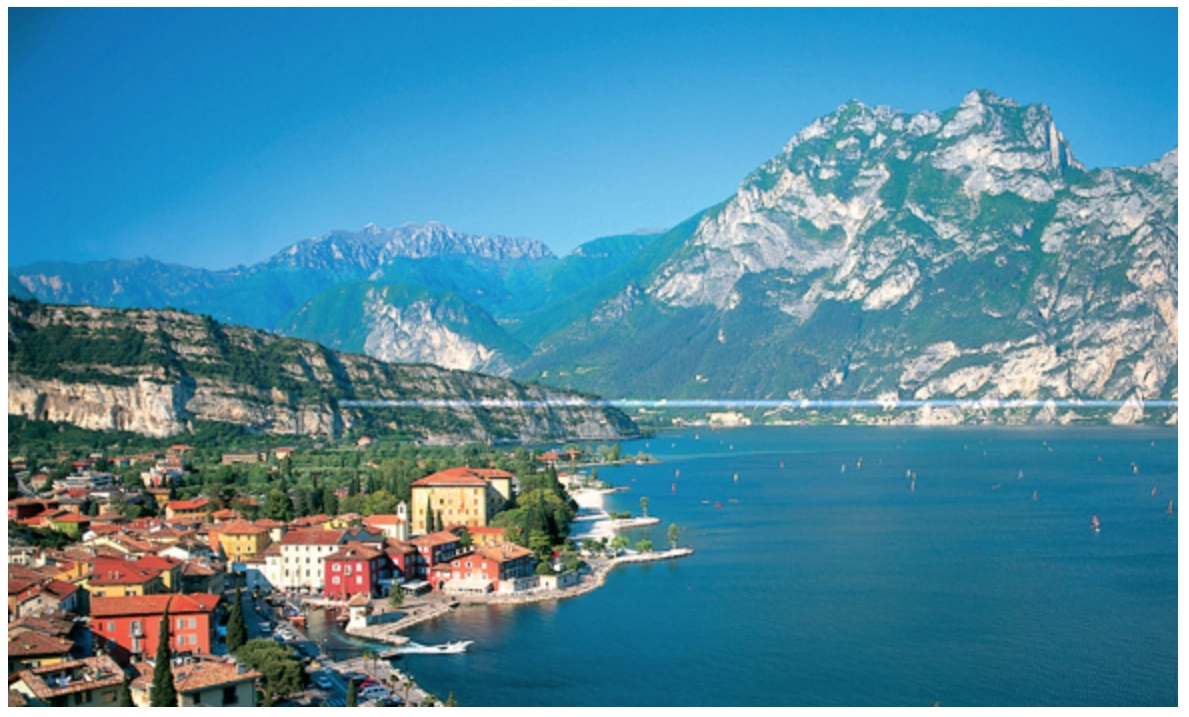
A land where history meets modernity, Italy seamlessly blends ancient traditions with vibrant culture. From the ruins of Rome and the charm of Venice to the rolling hills of Tuscany and the southern Alps, its landscapes are as diverse as they are stunning. Its central Mediterranean location made it the cradle of European civilization and home to the Roman Empire, which gave rise to great artists, thinkers, and countless historic landmarks.
Italians are known for their warm hospitality, lively spirit, and deep-rooted cultural pride—making the country as unforgettable as its scenery.
Italy truly is a captivating country with its rich history, vibrant culture, and stunning landscapes. The individuality and expressiveness of Italians add to the charm, making it a unique destination for travelers. From the artistic masterpieces of Da Vinci and Raphael to the literary works of Dante and Boccaccio, Italy's contribution to Western civilization is indeed unparalleled.
Venetian Riviera
To the north of the Adriatic Riviera lies the Venetian Riviera, featuring the prestigious resort of Lido di Jesolo, located 35 km from Venice. The Venetian Riviera is one of the most sought-after beach resorts in Italy. Tourists from around the world consider it a great fortune to vacation in Lignano, Bibione, Caorle, Lido di Jesolo, and other cozy, sunny resorts near Venice and on the northern coast of the Adriatic Sea.
The region offers excellent vacation conditions: the mountains protect from strong northern winds, and the sea is calm and shallow, with a bathing season from May to October. The long, gentle beaches with fine sand are well-equipped.
Entertainment options for young tourists include amusement rides, a large zoo, an aquarium in Bibione, one of Italy's largest water parks in Lido di Jesolo, and amusement parks like Gulliverlandia in Lignano, covering about 40,000 hectares. For sports enthusiasts, there are yacht and boat rentals, water sports schools, golf clubs, and numerous sports grounds.
The Venetian Riviera also offers vibrant nightlife with discos, restaurants, cafes, dance performances, and shows in the streets and squares.
ADRIATIC COAST
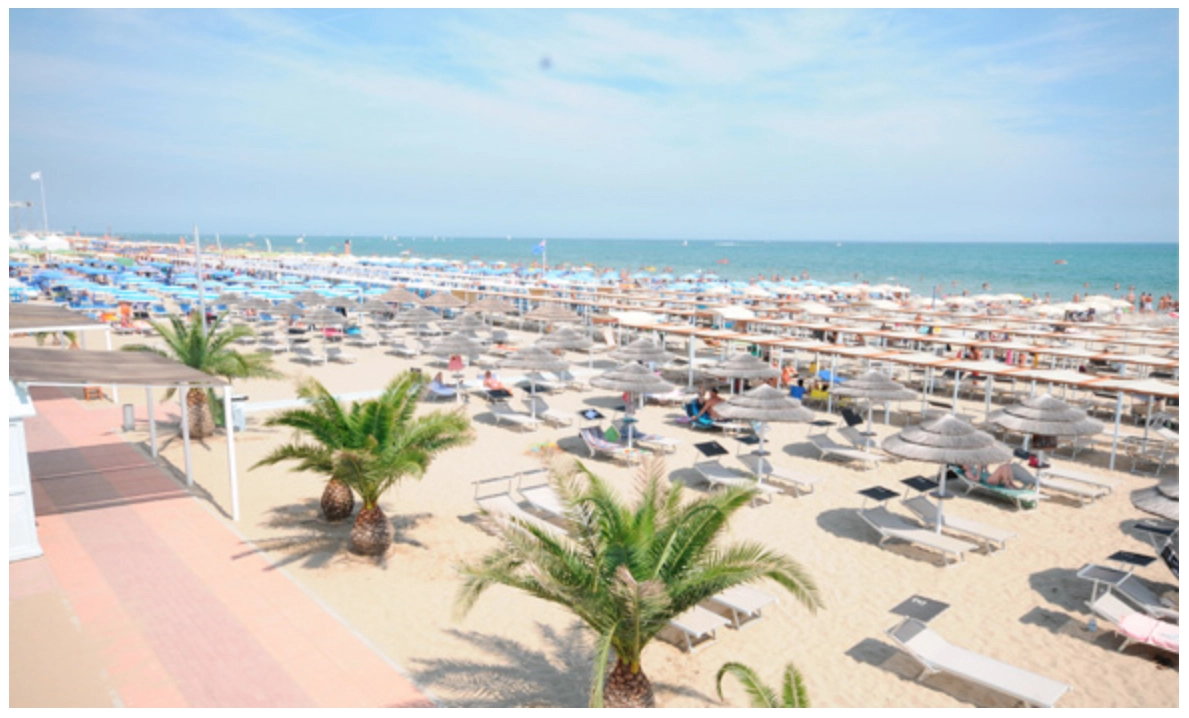
The Adriatic coast of Italy, with its golden sand, mild climate, and calm sea, has been attracting vacationers since the mid-eighteenth century. Every year, millions of tourists visit the beaches of Milano-Marittima, Rimini, Riccione, Cattolica, Gabicce, Pesaro, and others. The Adriatic Riviera is the top tourist destination in Italy, offering about 300 kilometers of coastline, over 600 beaches, and more than 18,000 hotels. The official bathing season runs from May 1 to September 30.
Milano Marittima, located 30 km north of Rimini, is one of the most prestigious resorts on the Adriatic Riviera. Known as a city-park, it is surrounded by pine and cedar groves, providing clean air and picturesque scenery. The abundance of flowering shrubs and bright flowerbeds creates a festive atmosphere.
Rimini is the most popular resort on the Adriatic coast, featuring 15 kilometers of sandy beaches divided into 10 zones: Torre Pedrera, Viserba, Viserbella, Rivabella, San Giuliano Mare, Marina Centro, Bellariva, Marebello, Rivazzurra, and Miramare. A road separates the hotels from the beach. Rimini is also a hub for shopping tourism, with many wholesale warehouses of Italian manufacturers. Entertainment options for children include the Beach Village water park, Italy in Miniature, Fiabilandia, and a dolphinarium. For adults, there are stores, restaurants, bars, discos, and nightclubs open until late at night.
Riccione, located south of Rimini, is another famous resort town on the Adriatic coast. It has about 500 hotels and a beach line stretching up to 7 km. Riccione attracts youth with its numerous discos, families with children due to its theme parks, and older visitors for the opportunity to combine a beach vacation with visits to therapeutic thermal baths. Riccione is also known as the capital of health, with thermal springs offering four types of water: sulphurous, salt, bromide-iodide, and manganese. The thermal season in Riccione is open year-round.
SICILIA
Sicily is the largest island in the Mediterranean Sea and an integral part of Italy. Located near the "toe of the Italian boot," it is bordered by the Mediterranean, Tyrrhenian, and Ionian Seas. Historically, Sicily held significant strategic importance due to its favorable position on Mediterranean trade routes. In the 1st millennium AD, its population exceeded 2 million, making it the most densely populated region on the planet at that time. The island is home to Mount Etna, an active volcano approximately 3,329 meters high.
Modern Sicily is renowned for its beautiful landscapes, clean seas, and diverse historical sites. The island has a typically mild Mediterranean climate and a population of nearly 5 million people, covering an area of 25,460 square kilometers. Sicily is an autonomous region of Italy with its own coat of arms, flag, and parliament. Palermo is the capital, and the island is divided into nine provinces: Palermo, Caltanissetta, Catania, Messina, Agrigento, Ragusa, Enna, Siracusa, and Trapani.
Tourism and agriculture are the main sources of income for Sicily. The island's history dates back to the Paleolithic era, with early buildings evidenced by archaeological findings in the caves of Levanzo and Pellegrino. The necropolis of Pantalica, dating back to the 13th century BC, is a notable archaeological monument and a UNESCO World Heritage Site. The city of Siracusa, the birthplace of Archimedes, is also on the UNESCO list due to its numerous ancient and later period monuments.
Sicily's rich historical heritage offers a glimpse into ancient epochs. Visitors should explore local restaurants to try Sicilian dishes and enjoy a couple of glasses of the local versions of sherry and madeira.
SARDINIA
Sardinia is the second largest island in the Mediterranean Sea, located west of the Apennine Peninsula between Sicily and Corsica. Its archaeological history dates back to the Neolithic period, featuring monuments such as the "tombs of giants," "Domus de Janas" tombs, and the Sardinian ziggurat, reminiscent of Mesopotamian ziggurats. Sardinian cultures maintained links with Minoan Crete and other Mediterranean cultures. Corsica, influenced by Sardinia in prehistoric times, has monuments similar to Sardinian ones.
The Nuragic period brought fame to ancient Sardinia, with invaders from the Eastern Mediterranean leaving behind nuraghi—towers in the form of truncated cones, 10-20 meters high, built by dry masonry of large roughly worked stones, dating from the 15th to 7th centuries BC. The island, measuring 270 km long and 150 km wide, is rich in natural and historical attractions. Excavations continue in various parts of the island, uncovering its secrets.
Sardinia boasts luxurious clean beaches, secluded bays, blue, turquoise, and emerald sea water, mountains, rocks, caves, underwater grottos, lush Mediterranean vegetation, and a hot subtropical climate. The island is divided into provinces: Cagliari, Carbonia-Iglesias, Medio-Campidano, Nuoro, Ogliastra, Olbia-Tempio, Oristano, and Sassari. The capital is Cagliari. National parks include Orosei Bay National Park, Gennargentu, and Asinara Island.
Natural masterpieces can be admired in the Geomineral Park of Barumini, a UNESCO World Heritage Site, or in the Cave of Neptune, which features long galleries of stalactites and stalagmites up to 1,000 years old, accessible via 652 steps carved into the rock in 1954. Sardinia's picturesque coast has more than 360 beaches, with attractive spots like the Emerald Coast, the Bay of Alghero, the Bay of Cagliari, and Gallura.
Sardinian cuisine offers high-quality products such as cheese, breads, sweets, wines, and liqueurs. The island caters to both lovers of quiet beach vacations and tourists seeking active entertainment and water sports. Sardinia also has very comfortable hotels.
Geography
Italy is a southern European country located in the center of the Mediterranean. It occupies the Apennine Peninsula, a small part of the Balkan Peninsula, the Padana Plain, the southern slopes of the Alps, and the islands of Sicily, Sardinia, along with several smaller islands.
Italy shares borders with:
- France in the northwest (488 km).
- Switzerland (740 km) and Austria (430 km) in the north.
- Slovenia in the northeast (232 km).
Additionally, Italy has internal borders with Vatican City (3.2 km) and San Marino (39 km). The country boasts the highest point in Europe, Mont Blanc (4,807 meters), and the largest active volcano in Europe, Mount Etna (3,340 meters). The total area of Italy is 301,000 square kilometers.
State
Italy is a decentralized unitary state, functioning as a parliamentary republic with a presidential form of government. The country is administratively divided into 20 regions, 110 provinces, and over 8,000 communes.
Italy has been a member of both the European Union and NATO since their inception. Economically, it stands as the third largest economy in the Eurozone.
State capital
Rome has been the capital of Italy since 1871, with its origins dating back to April 21, 752 BC. The city has a population of 2,864,348 people and is situated on the Tiber River.
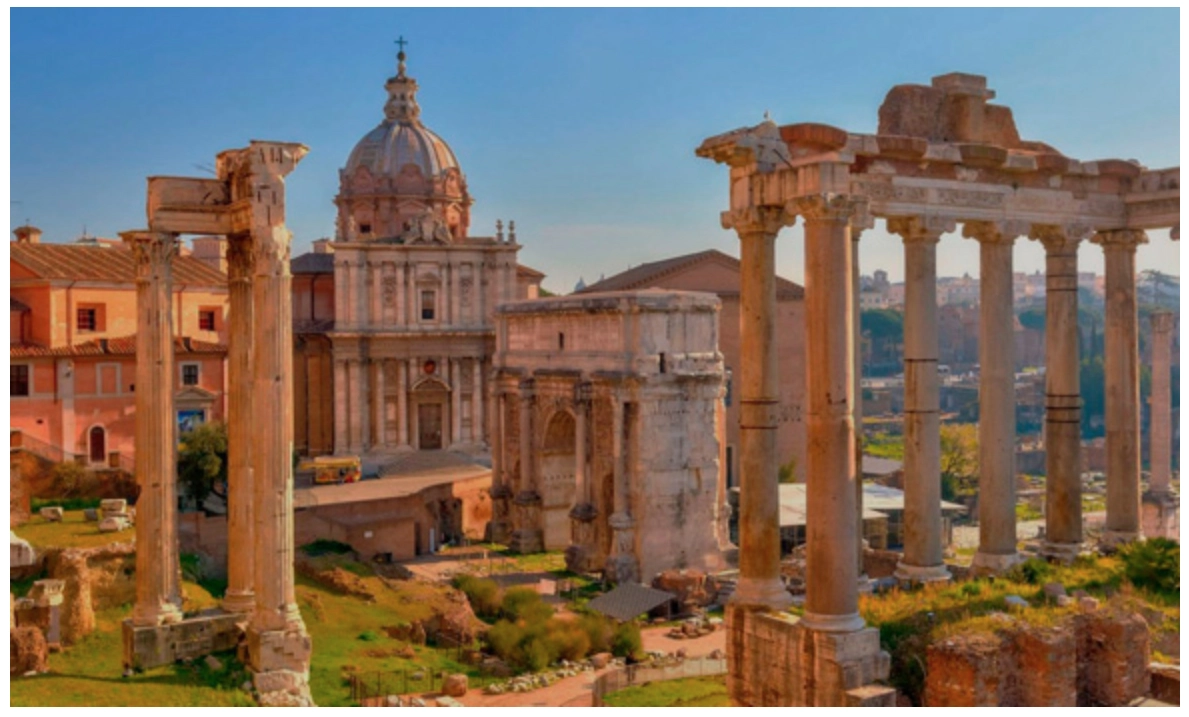
Rome is one of the oldest cities in the world and was the ancient capital of the Roman Empire. In Antiquity (3rd century AD), it was referred to as the "Eternal City," a concept that persisted even after the fall of ancient Roman civilization. This epithet is still used in modern languages. Rome is also known as the "city on seven hills."
Famous landmarks in Rome include:
- Roman Forum and Imperial Forums: Ruins of ancient architectural buildings.
- Colosseum: Ancient Roman amphitheater.
- Pantheon: Ancient Roman temple dedicated to all gods.
- Castel Sant'Angelo.
- St. Peter's Basilica: The largest church in Europe and the center of Catholicism, located in Vatican City.
- Piazza Navona: Featuring the Fountain of the Four Rivers by Giovanni Lorenzo Bernini.
- Piazza di Spagna and the Spanish Steps.
- Trevi Fountain: The most famous fountain in Rome.
- Fountain of the Turtles.
- Villa Borghese.
These landmarks, among many others, contribute to Rome's rich historical and cultural heritage.
Climate and Seasonality
Italy is situated in a subtropical Mediterranean climate zone. The influence of the sea is enhanced by the Alps, which act as a barrier to the north and west winds.
Time
The time difference between Italy and Tbilisi is 2 hours.
Religion Language Population
The number of parishioners of the Roman Catholic Church in Italy is 97%, with the remaining population consisting of Jehovah's Witnesses, Orthodox Christians, and Evangelicals.
The state language is Italian. In tourist centers, English and French are commonly understood. Additionally, German is officially recognized in South Tyrol and Bolzano, where it operates on equal footing with Italian. Slovenian has regional status in Gorizia and Trieste, while French is recognized in the Aosta Valley.
Italy has a population of 60,796,000 people. Of this population, 93% are Italians. More than 1% are Romanians and North Africans, and less than 1% are Albanians, Chinese, and Ukrainians. The country is also home to various local ethnic groups, including Sicilians, Sardinians, Tuscans, Calabrians, Ligurians, and others.
Traditions and Customs
Italians celebrate holidays in a fun and relaxed manner, adhering to traditions. Christmas is always celebrated with family, while Easter is spent with friends. An Italian proverb says, “Christmas is closer to the family, Easter can be on the side.” Each region has its own traditional Easter dishes. New Year is celebrated with noisy street festivals, and customs include throwing out unnecessary things and breaking dishes to get rid of resentments and negative energy.
Family is the main value for Italians, with children being the treasure of every family. Children are pampered and taken everywhere by their parents. Kindergartens are not common; grandparents or non-working mothers usually care for small children. Italian men are very attached to their families, often prioritizing them over their spouses, which can be a point of contention.
When meeting someone, Italians often add their specialty or profession to their name to indicate social status. It is customary to greet and say goodbye when entering and leaving a store, even if no purchase is made. Italians are expressive, talking loudly and gesticulating during conversations. Public displays of affection, such as kissing and hugging, are common, and touching during a conversation is a friendly gesture.
Tax Free Money
Italy uses the Euro (€), which is divided into 100 cents. The currency in circulation includes banknotes of 5, 10, 20, 50, 100, 200, and 500 euros, and coins of 1, 2, 5, 10, 20, and 50 cents.
Currency exchange can be done at exchange offices, banks, and post offices. Airport exchange offices operate 24/7 but usually offer less favorable rates. Exchange machines that accept US dollars are also available. Credit cards and traveler's checks are widely accepted, though most gas stations require cash payments.
Many stores participate in the tax-free sales system, providing special checks that can be cashed at designated windows at airports or border crossings. When paying for goods or services, customers are legally required to request a tax receipt ("ricevuta fiscale"), which must be presented before leaving the establishment.
Tips
The question of whether to tip in Italy is quite common, and there is no definitive answer. On one hand, tips are already included in the bill, so additional remuneration to the service staff is not required. On the other hand, Italians themselves sometimes leave tips. Typically, they consider it necessary to tip waiters after visiting VIP-class restaurants, but they never tip in ordinary cafes and cabs.
Cuisine
Italian cuisine is renowned worldwide, particularly for dishes like pizza and pasta. It is highly diverse and region-specific, with each area boasting its own traditional dishes. The foundation of most Italian cuisine includes dough, a variety of cheeses, herbs, vegetables (especially garlic), and olive oil. Many restaurants pride themselves on preparing dishes according to ancient recipes, some dating back to the Punic Wars.
Pasta, in its numerous varieties, is a hallmark of Italian cuisine. This includes all pasta products, many of which feature various fillings. Coffee is also a significant part of Italian culture, with numerous preparation methods. While espresso and cappuccino are popular among tourists, locals in the north prefer "corretto" (coffee with grappa) or Turkish coffee, and southerners enjoy very strong coffee from tiny cups, often with plenty of sugar.
Italian wines such as Chianti, Martini, and sparkling wines like Asti are well-regarded. Aperitifs like Campari, liqueurs such as Amaretto and Sambuca, and the national vodka, grappa, are also popular.
If you have any specific questions about Italian cuisine or need recommendations, feel free to ask!
Transport
Italy has a well-developed network of railroads and highways that connect the country's cities. Railroad transport is more developed in the north, while road transport is more prevalent in the south. Over 90% of passengers and more than 80% of cargo are transported by automobile. Sea transport dominates external transportation, with Italy's merchant fleet consisting of 667 ships, making it the 17th largest in the world by total tonnage.
Buses are less popular due to the cheaper cost of train travel. In cities, intercity bus stops are made on demand. Cabs can be ordered by phone from a hotel, bar, restaurant, or pay phone, but you will also have to pay for the time the cab takes to travel to the place of the call. In Rome, cab fares are approximately €4.06 for landing and the first 3 kilometers, then €0.7 per kilometer. From 22:00 to 07:00, there is a surcharge of €1.76 per kilometer, and on Sundays and public holidays, the surcharge is €0.59. Each official cab has information in English about rates for luggage, night fares, Sundays, public holidays, and airport trips.
Rome's subway consists of two intersecting lines. One-day passes valid for the subway, streetcars, and buses cost about €2.35, and weekly passes cost €10.59. In Venice, the only means of public transportation are river streetcars. A ticket for a single ride costs between €1.47 and €2.06, while a daily pass costs €8.24.
If you need more detailed information or have any other questions, feel free to ask!
Car Rental
Renting a car in Italy requires a credit card and an international driver's license. The cost starts at around 90 euros per day, with lower daily rates for longer rental periods. The speed limit is 130 km/h on highways and 110 km/h on roads outside of cities.
Many gas stations close after 19:00, for 2-3 hours in the middle of the day, and on Sundays. However, gas stations on expressways operate around the clock.
If you need more information or have any other questions, feel free to ask!
Hotel Check-In Deposits
Upon check-in at some hotels, tourists may be required to pay a cash deposit for the safety of the room's contents and minibar. This deposit is fully refundable upon check-out.
Check-In and Check-Out Times:
- Check-In: After 14:00, according to international rules.
- Check-Out: Before 12:00 noon.
Electric Voltage
In Italy, the mains voltage is standard 220V, and all sockets are European style.
Emergency Numbers
- 112 - Single number for calling emergency services
- 113 - Police
- 118 - Emergency Medical Service
- 115 - Fire Department
- 911 - redirects to 112
- 117 - Customs Service
- 1530 - Coast Guard
Hours Of Work
Banks, offices, government offices, and post offices in Italy are open Monday through Friday from 8:30 a.m. to 1:30 p.m. and 3:00 p.m. to 4:15 p.m. (or 4:30 p.m., one hour after lunch). They are closed on Saturdays and Sundays. Pharmacies follow the same schedule, although there are 24-hour duty pharmacies.
Most stores open at 9:30 a.m., break for lunch between 1:30 p.m. and 3:30 p.m., and close at 7:30 p.m. or 8:00 p.m. Most stores are closed on Sundays, but large shopping centers may stay open until 9:00 p.m. or 10:00 p.m. during the season. Siesta is observed from 12:30 p.m. to 2:30 p.m. or 3:00 p.m., during which most institutions are closed.
Cafes and restaurants typically open at 12:00 p.m., close for a few hours in the afternoon, and reopen at 5:00 p.m. or 6:00 p.m. This does not apply to large cities like Rome, Milan, and Naples, where some pizzerias stay open until the last customer leaves. The same practice is observed in restaurants at Italian resorts. Traditionally, cafes and restaurants close at 10:00 p.m. or 11:00 p.m.
Embassy Of Georgia
The Embassy of Georgia in Rome is located at Corso Vittorio Emanuele II, 21. Scala A, Int.4, 00186 Roma, Italy
Tel.: (+3906) 699 232 98, (+3906) 699 258 09
E-mail: rome.emb@mfa.gov.ge
www.italy.mfa.gov.ge
Consular Section: (+3906) 699 419 72
Fax : (+3906) 699 419 42
E-mail: amgeorgia@libero.it
Public Holidays
- January 1 - New Year;
- January 6 - Epiphany or Befana, Epiphany, Epiphany of the Lord;
- March 8 - International Women's Day; is not a statutory holiday and is a working day;
- April 21 - Day of the Founding of Rome;
- April 25 - Day of Liberation from Fascism and German Occupation;
- May 1 - Labor Day;
- June 2 - Day of Proclamation of the Republic of Italy;
- August 15 - Ferragosto, Assumption of the Virgin Mary or Ascension;
- November 1 - All Saints' Day;
- November 2 - Day of all the faithful departed;
- December 25 - Christmas;
- December 26 - St. Stephen's Day.
Visa Regime
Citizens of Georgia do not need a visa for a tourist trip to Italy, provided their passport is valid for at least 6 months after the date of entry. They can stay in Italy for up to 90 days within a 180-day period without a visa. This also applies to minors.
However, according to international conventions, the authorities of a foreign country have the right to refuse entry to any person, with or without providing reasons. In the event of deportation, the individual will bear all related costs.
If you have any more questions or need further assistance, feel free to ask!
Useful information